


Flip Trickster - Parkour Simul
3.76.47K Reviews
App Specs
- Version
- 1.11.67
- Updated On
- License
- Free
- Downloads
- 10,000,000+
- Developer
- 7 Minute Games
- Categories
- Simulation
- Platform
- Android
Screenshots
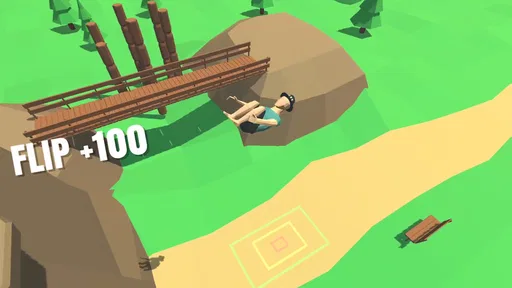
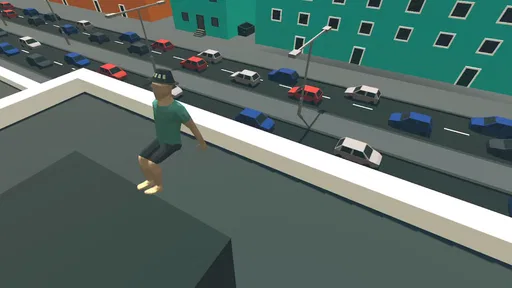
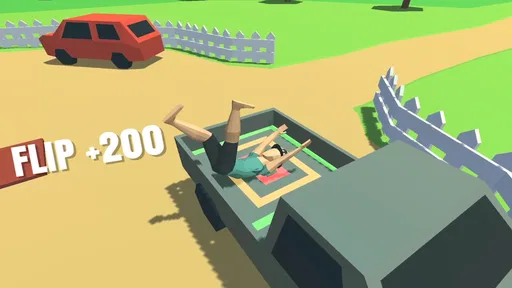
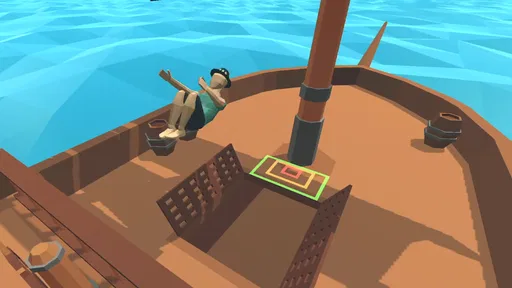
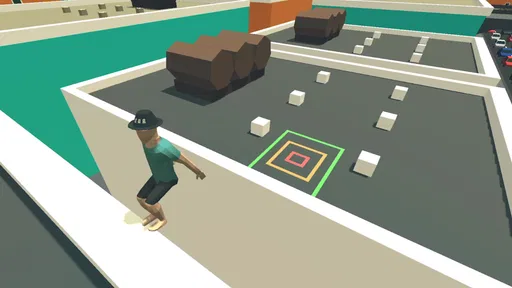
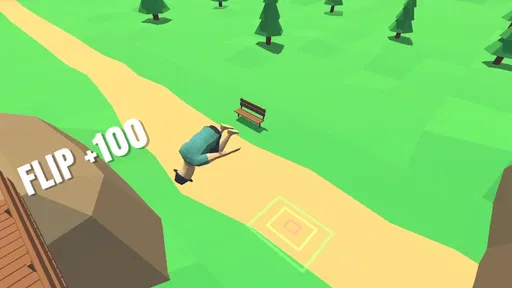
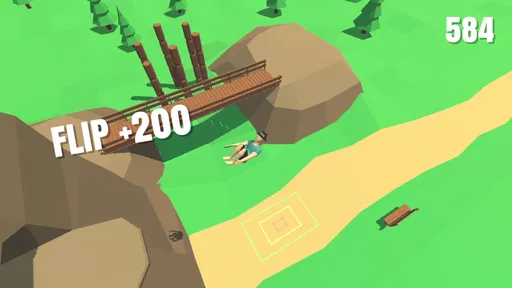
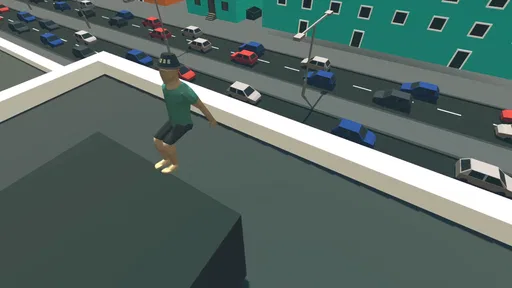
 Analysis by AppCompare
I approached Flip Trickster - Parkour Simul as a quick-play simulation game rather than a traditional action title. Its appeal is easy to understand: you line up a jump, launch a flip, and try to land with enough control to keep moving. That sounds simple, but the timing makes each attempt more demanding than the store summary suggests. A small adjustment can turn a clean landing into an awkward crash, so the game rewards patience as much as reflexes.
After spending time with it, I see a very specific kind of value here. It is a good choice if you enjoy short challenges, repeated attempts, and the satisfaction of improving one movement at a time. It is less suitable if you want a deep story, a large social experience, or a simulation that behaves like real parkour training. The best way to judge it is not by asking whether it offers the biggest feature set in its category, but whether its focused trick-and-landing loop fits the way you like to play.
What to consider before installing
The first decision is whether you enjoy learning through failure. This game does not feel designed for players who expect to succeed immediately. The basic controls are approachable, yet a successful run depends on reading the jump, choosing the right moment to rotate, and correcting your character before touching down. I found that the early attempts are useful mainly because they teach timing. Treating every failed landing as wasted time makes the experience frustrating; treating it as feedback makes the loop much more enjoyable.
The second decision is how much variety you need from a mobile game. This is a compact simulation game built around parkour-style flips and landings. Its identity comes from refining that central action, not from surrounding it with a large role-playing system or an elaborate narrative. If you like games that can be understood in seconds but practiced for much longer, that focus works in its favor. If you need constant changes in genre or objective, the narrow design may feel repetitive.
The third consideration is your preferred session length. I found it particularly comfortable for brief breaks because an attempt can be started and finished quickly. That makes it useful while waiting for transport, during a short rest, or when I want something interactive without committing to a long campaign. At the same time, short sessions do not automatically mean low intensity. A few failed jumps can make me concentrate more than I expected, especially when I know the landing was almost right.
It is also worth considering the control relationship. The game is about translating a simple input into a physical result, so the screen can feel unforgiving when the timing is slightly off. Players who enjoy rhythm, precision, and trial-and-error will probably understand the appeal quickly. Players who prefer forgiving controls and constant forward progress may find the same design unnecessarily demanding.
The learning curve is the real progression
One of the more important things I noticed is that progress is partly personal. Even when the game presents a familiar type of jump, I become better at judging when to commit and when to correct. That means the experience can feel rewarding without needing a complicated upgrade system. The improvement comes from my own decisions, which is a stronger motivator than simply watching numbers rise.
Worth Reading Before You Choose

EA SPORTS FC Mobile 26 Is a Bigger Football Game, but It Takes Time

Flipboard Shows What News Apps Must Do Beyond the Feed

Switching to Android Auto Means Rethinking Your Driving Routine

Google Calendar Makes a Crowded Week Easier to Manage

Ludo King Makes the Most of the Minutes Between Plans

Baby Panda World Brings Quick Play to Modern Phones, but Its Game Library Feels Busy
A useful habit is to focus on one mistake at a time. If I miss a landing, I try to decide whether the problem was the launch, the rotation, or the final correction. Changing everything on the next attempt usually makes the result harder to understand. Keeping one variable stable gives the game a more readable rhythm and helps turn repetition into practice rather than guesswork.
This is also where the game differs from casual games that rely almost entirely on instant rewards. It can still be played casually, but the most satisfying moments arrive after several imperfect attempts. I would not recommend judging it during the first few minutes alone. The controls make more sense once I stop expecting the character to do exactly what I imagine and start learning how the game interprets each movement.
Where the focused design works best
The strongest part of the experience is its immediate feedback. A jump either develops into a convincing trick or falls apart in a way that is easy to recognize. That clarity makes it simple to identify the moment where a run went wrong. I never needed a long explanation to understand that I had rotated too early or failed to prepare for the landing.
That directness gives the game a satisfying “one more try” quality. I can finish an attempt, understand why it failed, and restart without navigating through a complicated set of menus. For a mobile game, that low friction matters. It keeps the attention on the movement itself instead of making me manage a large amount of surrounding content.
The parkour theme also gives the game a stronger personality than a generic physics challenge. The goal is not merely to move an object through an obstacle course. The flips, positioning, and landings create a recognizable fantasy of performing a stunt. Even when the mechanics are simple, that context makes a successful attempt feel more expressive.
I especially liked using it when I wanted a game that could occupy my hands without demanding my entire evening. A realistic everyday scenario would be a short break between tasks: I can play a few attempts, put the phone down, and return later without needing to remember a plot or a complex set of objectives. That convenience is one of its clearest strengths.
Small techniques that make attempts more useful
My first practical tip is to avoid rushing the opening movement. It is tempting to focus on the flip because that is the visually exciting part, but the quality of the launch determines how much control remains later. I got more consistent results when I treated the beginning of the jump as preparation rather than as a moment to press ahead immediately.
Second, I recommend watching the character’s position relative to the landing area instead of staring only at the rotation. The trick can look impressive while still being badly aligned. Shifting attention toward the landing gives a better sense of whether a correction is actually helping. This is a small change in focus, but it prevents the common mistake of celebrating the flip before securing the finish.
Third, use failed attempts to build a mental timing reference. I found it more effective to remember the point at which a successful rotation begins than to rely on frantic corrections near the ground. Once that timing becomes familiar, the controls feel less like random tapping and more like a sequence I can deliberately repeat.
Finally, do not confuse a dramatic attempt with a good attempt. A flashy rotation that ends badly is less useful than a modest trick followed by a stable landing. When I prioritized completion first, the game became easier to read. After that, I could experiment with more ambitious movement without losing the basic sense of control.
Where other types of games may fit better
The main alternatives are not necessarily direct copies. A conventional racing game may be better for someone who wants speed, tracks, and continuous forward motion. A platform game may suit a player who prefers exploration, jumping between surfaces, and discovering routes. A sports game may be the better choice for someone who wants teams, matches, or a broader competitive structure. This title is more specialized: it turns the stunt itself into the main event.
That specialization is both its advantage and its limitation. Compared with a broad action game, it is easier to pick up and requires less time to understand. Compared with a larger simulation, it offers a smaller slice of the activity and therefore less variety in what I am doing from moment to moment. I would choose it when I want precision practice, not when I want a complete parkour world.
Players who enjoy collecting, long-term customization, or a story-led journey should think carefully before choosing it. The central pleasure here comes from execution. If the satisfaction of improving a landing does not appeal to you, extra attempts will probably feel like repetition rather than progression. In that case, a platformer with exploration or a sports title with structured events may provide a better reason to keep playing.
There is also a difference between this game and a serious training tool. The parkour presentation can make movement feel energetic and skillful, but I would not use it to learn real-world technique. It is entertainment built around the idea of flips and landings, not a substitute for coaching, safety instruction, or physical practice. That distinction matters for anyone attracted by the theme rather than the game mechanics.
Performance, access, and spending
The game is free to install, which makes trying it straightforward. It carries an Everyone age rating, so it is positioned as a broadly accessible title rather than one aimed at mature audiences. The developer is 7 Minute Games, and the game has been available since early 2018, giving it a relatively established place among mobile simulation releases.
Its current version is 1.11.67 and it requires Android 6.0 or later. Those details are useful when deciding whether an older device can run it, although compatibility alone does not guarantee that every phone will feel equally comfortable for timing-based play. On a smaller or less responsive screen, the precision element may be more noticeable than it would be on a newer device.
There are optional in-app purchases, with individual items ranging from under a dollar to around twenty dollars. I would approach those purchases carefully. The core reason to play is the movement loop, so spending should only make sense if you already enjoy the game and understand what an item adds to your experience. I would not install it expecting that purchases will replace the practice needed to improve.
The game has attracted over ten million installs, alongside an average rating of about 3.7 from roughly eighty-two thousand ratings. I read that combination as a sign of broad curiosity and a mixed experience rather than an automatic recommendation. Many people are clearly willing to try the concept, but the rating also suggests that the focused controls and repetition will not suit everyone.
The cost of switching from another mobile game
Switching to this game is easy if your current favorite is a quick arcade title. You do not need to learn a large ruleset, memorize a story, or build a complicated character before understanding the objective. The real cost is behavioral: you must accept that progress may come from repeating the same kind of action with better timing.
If you are coming from a game with generous checkpoints or predictable upgrades, the adjustment may be more noticeable. Here, I found that patience matters more than simply playing for a longer uninterrupted period. A short, focused session can teach more than a long session where I repeat the same mistake without changing my approach.
There is also a trade-off in attention. Because the game depends on precise moments, it is not ideal when I am constantly distracted. I can play it briefly, but I cannot always play it casually in the sense of ignoring the screen. For a genuinely relaxed experience, a slower puzzle game or an idle simulation may be a better alternative.
On the other hand, switching makes sense if your current mobile games feel overloaded. This title gives me a cleaner objective and a more immediate relationship between action and result. I am not managing a large inventory or following several systems at once. I am trying to make the next jump work, then using what I learned to attempt a better one.
Who should choose it, and who should skip it
I would recommend it to players who enjoy stunt games, compact simulation experiences, and mechanics that reward repetition. It is particularly suitable for someone who likes seeing a failed attempt as a puzzle to solve. It also works well for people who want a free game that can be sampled quickly before deciding whether its control style is worth mastering.
I would be more cautious recommending it to anyone looking for a deep career mode, a narrative adventure, or a broad multiplayer-style experience. The game’s identity is too concentrated for those expectations. It may also disappoint players who want immediate mastery, because the most satisfying results come after learning the timing rather than simply following obvious instructions.
Parents and younger players may appreciate the Everyone rating, but the age classification does not remove the need to consider temperament. A child who enjoys experimenting may find the repeated attempts entertaining. A child who becomes frustrated by missed landings may need a different kind of game, even though the content itself is broadly suitable.
My recommendation after playing
I think this is worth trying if you want a focused parkour simulation with quick attempts and a clear skill curve. Its best moments come when a jump that repeatedly failed suddenly works because your timing improved. That feeling is personal and immediate, and the game does not need a large amount of extra content to create it.
My recommendation is more conditional if you want variety above all else. In that situation, choose a broader platform, sports, or action game instead. You will probably get more different activities and a stronger sense of long-term change. This title is the better pick when the movement itself is enough to keep you interested.
Before spending anything, I would play several sessions and decide whether the basic controls feel satisfying. That is the most important test because optional purchases cannot solve a mismatch between your expectations and the core loop. If you enjoy analyzing landings and trying again with a better plan, the free entry point gives you a reasonable opportunity to find out.
Overall, I see Flip Trickster as a specialized mobile game with a clear audience. It is not trying to be a complete parkour lifestyle or a full sports simulation. It is a compact challenge about launching, rotating, correcting, and landing. Choose it for the satisfaction of improving a difficult trick, not for a large collection of unrelated features. For the right player, that narrow focus is exactly what makes it enjoyable; for everyone else, it is the clearest reason to keep looking.
Pros
- Responsive controls make flips and landings feel satisfying.
- Multiple environments provide variety beyond the initial levels.
- Replay-focused gameplay encourages experimentation with different tricks.
- Short challenges are convenient for quick gaming sessions.
- Physics-based movement creates entertaining and unpredictable moments.
Cons
- Precision landings can feel frustrating when timing is slightly off.
- Progress may become repetitive after mastering the main trick types.
- Some levels require repeated attempts with little room for error.
- The camera can occasionally make judging distances difficult.
- Ads may interrupt play unless removed through an in-app purchase.
FAQs for Flip Trickster - Parkour Simul
What is Flip Trickster - Parkour Simul?
Flip Trickster - Parkour Simul is a physics-based stunt game focused on performing flips, jumps, and parkour-style landings. You control a character launching from platforms, rooftops, and other obstacles while trying to rotate accurately and land safely. The game combines simple touch controls with timing and momentum, so successful tricks depend on more than simply tapping the screen quickly.
How do you play Flip Trickster - Parkour Simul?
The main objective is to jump from a starting point, perform one or more flips, and land within the designated area. Players generally control the character’s rotation and timing through touch gestures or on-screen input, adjusting the movement while airborne. Each level introduces different heights, platforms, and landing challenges, making it important to judge distance, rotation speed, and the character’s final position before touching down.
Is Flip Trickster - Parkour Simul free to download and play?
Flip Trickster - Parkour Simul can generally be downloaded for free, allowing players to try its core gameplay without an initial purchase. However, free versions of mobile games may include advertising, optional in-app purchases, or other limitations depending on the platform and current release. Before downloading, check the official store listing for the latest information about payments, ads, and available content.
Is Flip Trickster - Parkour Simul suitable for children?
The game is relatively easy to understand because its main concept is based on jumping, flipping, and landing. Nevertheless, younger players may find the physics challenging, especially when levels require precise timing and repeated attempts. Parents should review the age rating and store information before installation, particularly because advertising or optional purchases may be present. The game does not replace real-world parkour training and should not encourage unsafe physical imitation.
Does Flip Trickster - Parkour Simul require an internet connection?
The basic stunt and level gameplay may be playable without a constant internet connection, which makes the game convenient for short sessions while traveling or when mobile data is unavailable. Some features, advertisements, updates, online services, or purchase verification may still require connectivity. Because requirements can change between versions and devices, it is best to test the game in offline mode after installation rather than assuming every feature will work without internet access.


